
HEXCORE
Brand and platform architecture for a next-generation technology publication built against clickbait.
For Hexcore Media we built a publishing brand from zero: the identity, the interface and the platform itself. The result is an end-to-end digital publishing ecosystem that carries ten editorial verticals, unifies six distinct review types under a single taxonomy, and moves readers from article to decision through a comparison engine. The brand's motto, 'Silence the noise, find the signal', was applied not as decorative copy but as the founding rule of the information architecture.
“Silence the noise, find the signal: good design does not steal the reader's attention, it gives it back.”
LOGO DESIGN AND STORY
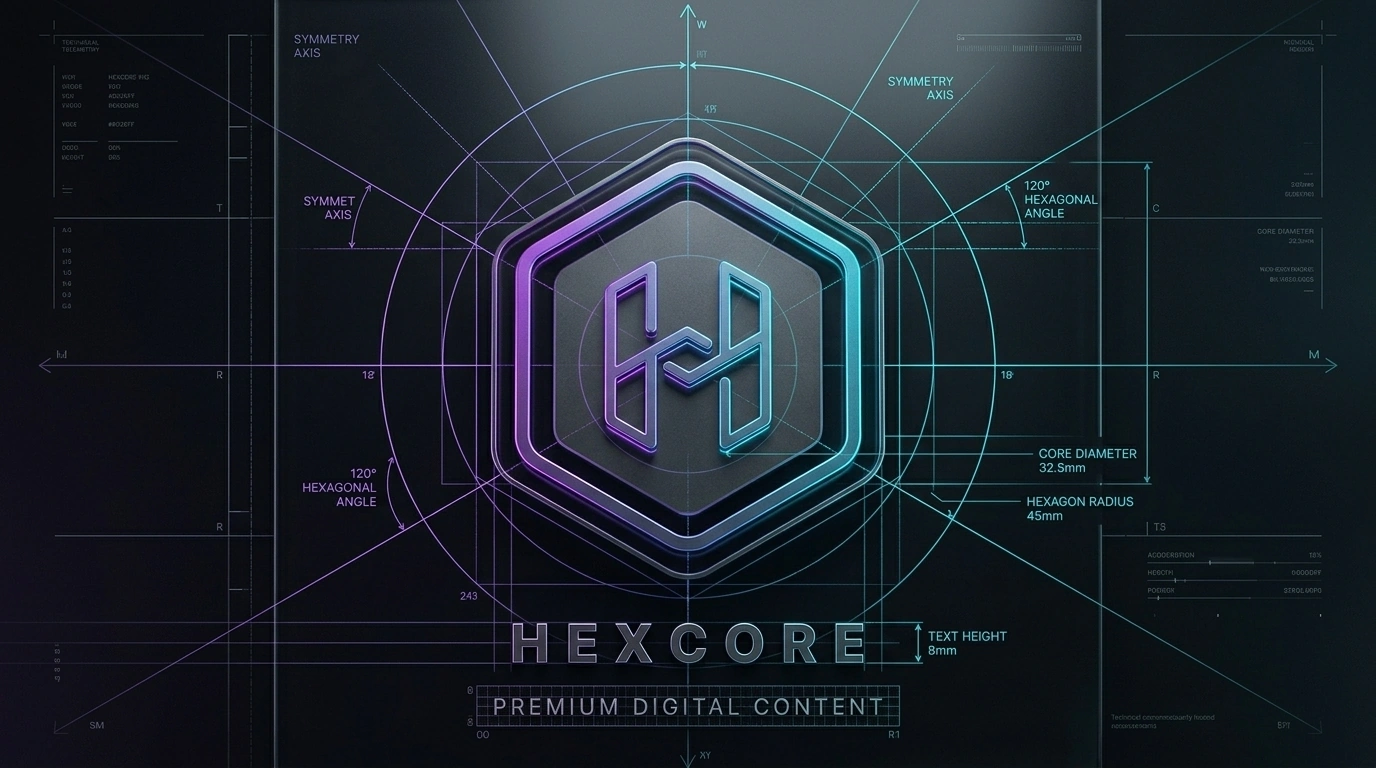
A founding mark that fuses the hexagonal cell (hex) with the notion of a core, carrying the modular structure of technology culture in a single symbol.
The logo states both the smallest building block of information and the network growing around it in one form. It was optimised to stay legible from 16 pixels on screen up to broadcast-scale reproduction.
DIGITAL DNA & COLOR TOKEN SYSTEM
STYLES IN USE
LAYOUT CHARACTER
Geometric Stability, High ContrastSILENCE THE NOISE, FIND THE SIGNAL.
ABCDEFGHIJKLMNOPQRSTUVWXYZ abcdefghijklmnopqrstuvwxyz 1234567890
HEXCORE VIOLET
#B026FF
THE SIGNATURE SIGNAL OF THE BRAND.
SIGNAL BLACK
#050505
THE GROUND THAT SILENCES THE NOISE.
CYAN NODE
#00EDFF
TECHNOLOGY VERTICAL ACCENT.
TERMINAL GREEN
#00FF9D
SOFTWARE AND DATA LAYER.
EDITORIAL ARCHITECTURE
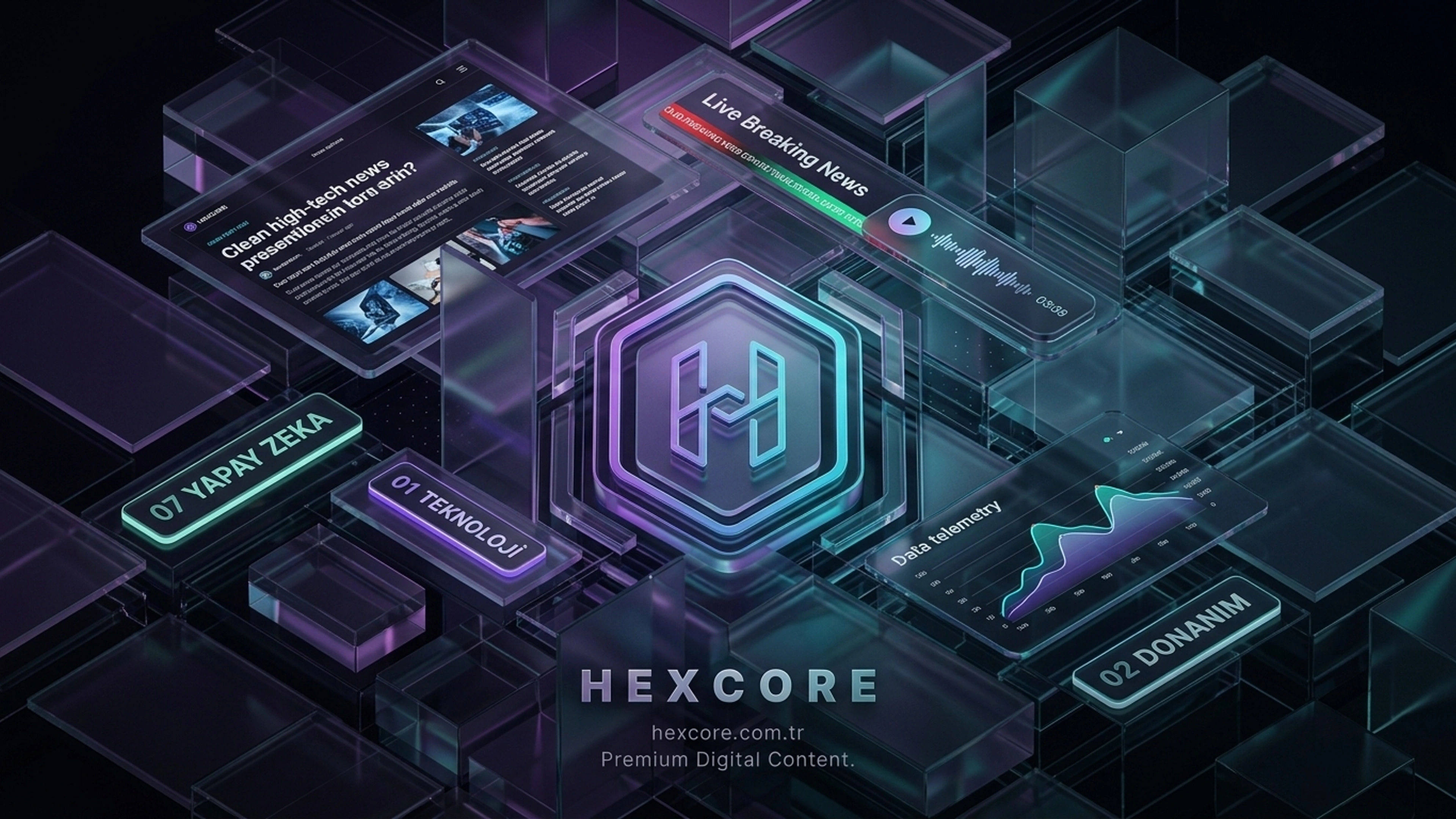
Agenda, artificial intelligence, technology, science, hardware, mobile, gaming, software, cinema and television: an information architecture that carries ten separate verticals in one reading flow without collision.
In multi-vertical publications the real risk is categories smothering one another. The hierarchy layers a breaking-news ticker, a daily audio digest and vertical blocks into a dual-speed structure supporting both rapid scanning and deep reading.
REVIEW AND COMPARISON ENGINE
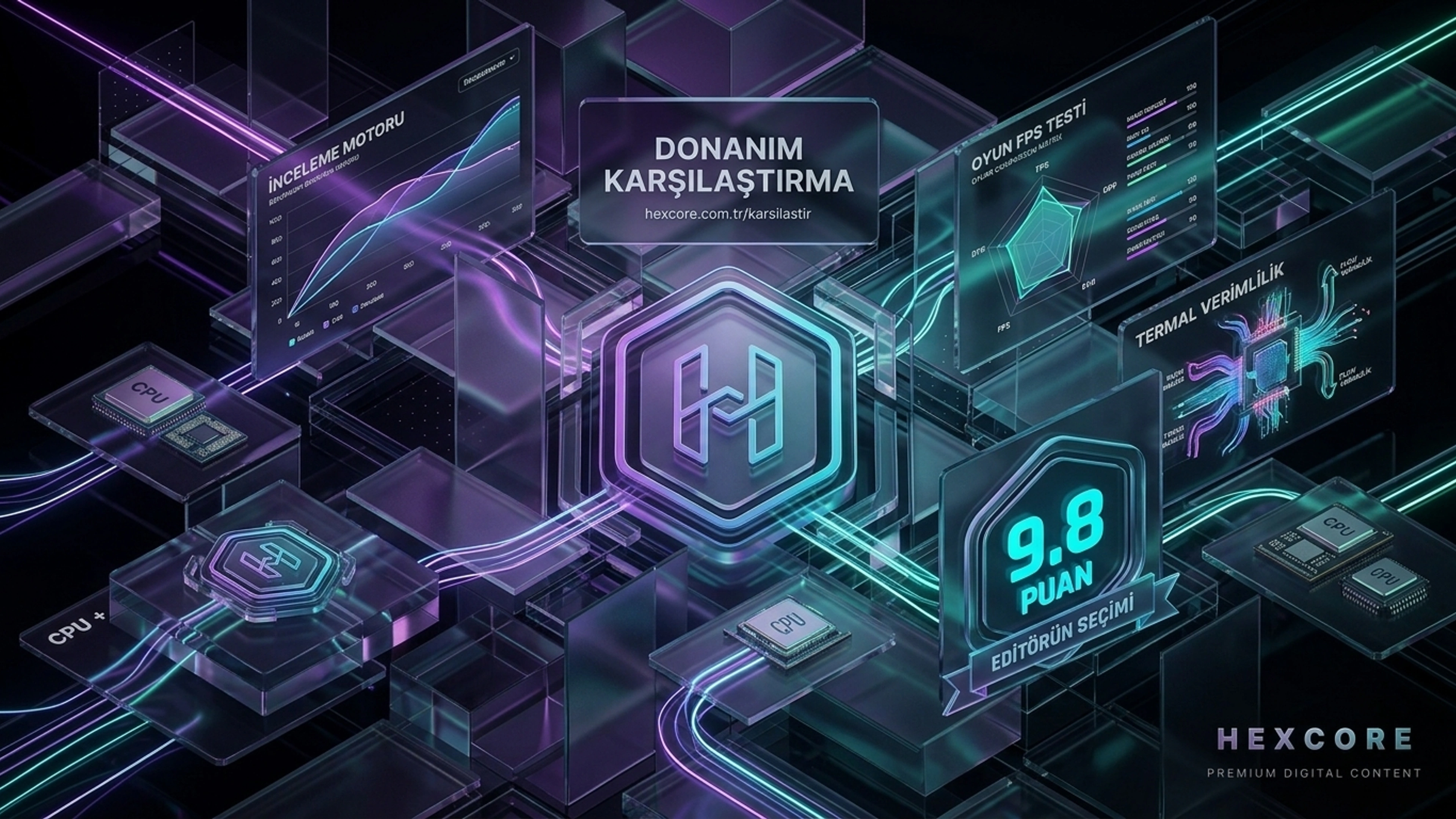
Hardware, product, game, film, series and anime: a taxonomy that brings six distinct review types into a shared scoring language, plus a side-by-side comparison interface.
Judging a graphics card and an anime within one system demands separate criteria sets per type. The comparison engine is the layer that carries readers from content to decision, and it is the highest-value interaction point for the publication.
PLATFORM & MEMBER EXPERIENCE
With author profiles, a membership system and a corporate layer, this is not a one-off website but a product a publication can grow on.
Publishing platforms scale on their capacity to manage content, not on content itself. The author system, membership and category architecture were built so that a growing team never forces a redesign.
DATA-DRIVEN CASE ANALYSIS (ROI)
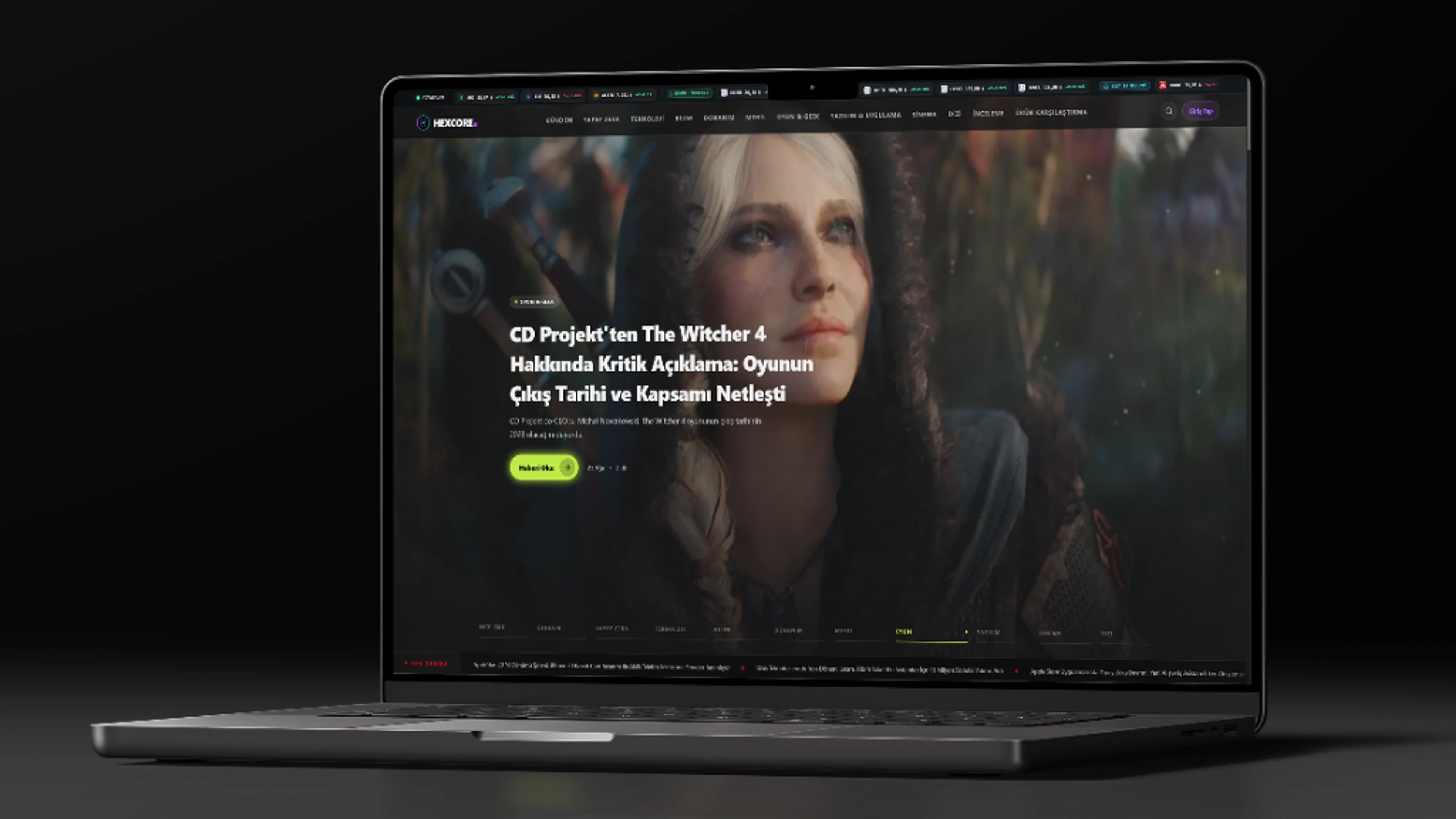
Positioning Hexcore in a crowded technology media field, we built the exact inverse of the clickbait economy: no inflated headlines, category signalled by colour, reading time and sourcing shown openly. The brand motto was turned into a rule of the information architecture.
Publishing Infrastructure and Growth Capacity: Ten editorial verticals, six review types and the comparison engine were built on tokens so that adding a category or an author requires no design or infrastructure intervention. The platform's cost of growth was kept independent of content volume.
HEXCORE
Brand and platform architecture for a next-generation technology publication built against clickbait.
For Hexcore Media we built a publishing brand from zero: the identity, the interface and the platform itself. The result is an end-to-end digital publishing ecosystem that carries ten editorial verticals, unifies six distinct review types under a single taxonomy, and moves readers from article to decision through a comparison engine. The brand's motto, 'Silence the noise, find the signal', was applied not as decorative copy but as the founding rule of the information architecture.
Silence the noise, find the signal: good design does not steal the reader's attention, it gives it back.
Brand ArchitectureEditorial SystemPlatform EngineeringDigital Publishing Ecosystem
LOGO DESIGN AND STORY
A founding mark that fuses the hexagonal cell (hex) with the notion of a core, carrying the modular structure of technology culture in a single symbol.
The logo states both the smallest building block of information and the network growing around it in one form. It was optimised to stay legible from 16 pixels on screen up to broadcast-scale reproduction.
DIGITAL DNA & COLOR TOKEN SYSTEM
A token-based visual system built on a dark theme that assigns each of the ten editorial verticals its own signature colour. Readers recognise the vertical from colour before they read a word.
Here colour is not decoration but a navigation layer. Every category carries its own accent defined as a CSS variable; the system expands to new verticals without breaking the design.
EDITORIAL ARCHITECTURE
Agenda, artificial intelligence, technology, science, hardware, mobile, gaming, software, cinema and television: an information architecture that carries ten separate verticals in one reading flow without collision.
In multi-vertical publications the real risk is categories smothering one another. The hierarchy layers a breaking-news ticker, a daily audio digest and vertical blocks into a dual-speed structure supporting both rapid scanning and deep reading.
REVIEW AND COMPARISON ENGINE
Hardware, product, game, film, series and anime: a taxonomy that brings six distinct review types into a shared scoring language, plus a side-by-side comparison interface.
Judging a graphics card and an anime within one system demands separate criteria sets per type. The comparison engine is the layer that carries readers from content to decision, and it is the highest-value interaction point for the publication.
PLATFORM & MEMBER EXPERIENCE
With author profiles, a membership system and a corporate layer, this is not a one-off website but a product a publication can grow on.
Publishing platforms scale on their capacity to manage content, not on content itself. The author system, membership and category architecture were built so that a growing team never forces a redesign.
DATA-DRIVEN CASE ANALYSIS (ROI)
Positioning Hexcore in a crowded technology media field, we built the exact inverse of the clickbait economy: no inflated headlines, category signalled by colour, reading time and sourcing shown openly. The brand motto was turned into a rule of the information architecture.
Publishing Infrastructure and Growth Capacity: Ten editorial verticals, six review types and the comparison engine were built on tokens so that adding a category or an author requires no design or infrastructure intervention. The platform's cost of growth was kept independent of content volume.