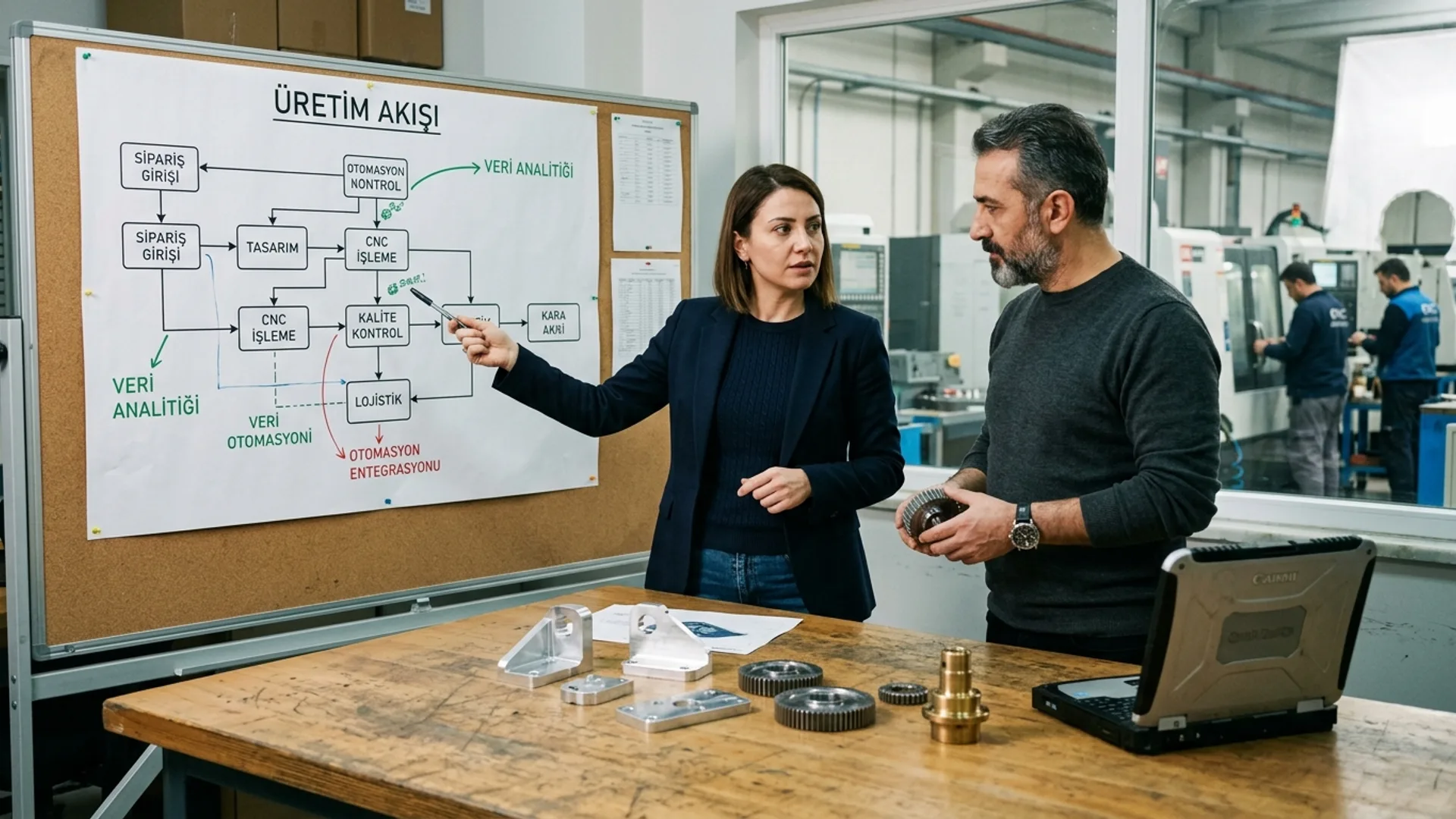
Comprehensive transformation guide and strategic roadmap for businesses combining regional industrial power with digital vision.
Digital Transformation: Why Now?
As one of the largest industrial hubs, digital transformation is critical for businesses in this region. Thousands of SMEs across automotive, textile, food, and machinery sectors must strengthen traditional business models with digital tools. Digital transformation is not just building a website; it is the holistic redesign of business processes, customer relations, and marketing strategies.
5 Pillars of Digital Transformation
- Professional Web Presence: Modern, SEO-compliant, mobile-first website
- Digital Marketing and SEO: Strategy for organic customer flow
- Social Media and Content Management: Brand awareness and interaction
- Corporate Identity and Consistency: Professional brand image everywhere
- Data Analytics and Measurement: Data-driven decision making
Early adopters gain a significant competitive advantage in both local and national markets. Digital transformation allows every business to lower costs, increase efficiency, and expand their customer base.
Why Bursa Is at a Digital Inflection Point
Bursa hosts more than 12,000 manufacturing companies across 13 organized industrial zones. The region's economic engine—automotive supply, textile, machinery, food, and furniture sectors—is increasingly competing against digitally mature competitors from Eastern Europe, Vietnam, and India. International buyers no longer rely solely on trade fair meetings; they research suppliers digitally for months before initiating contact. Bursa manufacturers without strong digital presence are simply invisible at the procurement decision moment.
Digital Transformation Maturity Levels
- Level 1 | Basic Presence: Static website, generic email, sporadic social media
- Level 2 | Operational Digital: CRM, ERP integration, e-invoicing, basic SEO
- Level 3 | Marketing-Digital: Content strategy, performance ads, analytics-driven decisions
- Level 4 | Data-Driven: BI dashboards, customer journey mapping, predictive analytics
- Level 5 | AI-Native: ML-powered personalization, automated workflows, generative AI integration
Industry 4.0 in Manufacturing
Beyond marketing digitization, Industry 4.0 transforms the production floor itself. IoT sensors monitor equipment health, predictive maintenance reduces downtime by 30-50%, computer vision systems enable real-time quality control, and digital twins simulate production changes before physical implementation. Bursa's automotive suppliers serving Renault, Fiat, and Toyota plants must align with OEM Industry 4.0 standards to maintain tier-1 supplier status. Late adopters risk losing major contracts to digitally compliant competitors.
CRM and Sales Process Digitization
Spreadsheet-based customer management is the silent profit killer for Bursa SMEs. A modern CRM (HubSpot, Salesforce, Zoho) centralizes customer data, automates follow-up sequences, tracks pipeline metrics, and provides forecasting visibility. The result: 25-40% reduction in sales cycle length and 15-20% increase in deal close rates. For B2B manufacturers managing dozens of distributor relationships and ongoing RFQs, CRM is no longer optional—it is the single most ROI-positive digital investment.
Marketing Automation for B2B
Marketing automation platforms (HubSpot, ActiveCampaign, Mailchimp Plus) enable lead nurturing at scale. A buyer who downloads your product catalog can be automatically enrolled in a 5-email educational sequence, scored based on engagement, and notified to sales when behavioral signals indicate purchase readiness. This automation transforms one-time inquiries into systematic conversion machines—particularly valuable for industrial sales cycles that typically span 3-9 months.
E-Commerce and Direct-to-Buyer Models
Traditional Bursa manufacturers depend heavily on distributors and trading companies—often surrendering 30-50% of margin. Digital transformation enables direct-to-buyer models through B2B e-commerce platforms, allowing factories to reach end customers in Germany, USA, and Gulf countries without intermediaries. Platforms like Shopify Plus, WooCommerce, and custom Next.js solutions support this transition, reclaiming margins while maintaining strategic distributor relationships.
Cloud Infrastructure Migration
On-premises servers and locally-hosted ERP systems are increasingly liabilities: high maintenance costs, security vulnerabilities, scaling limitations, and lack of remote access. Cloud migration (AWS, Azure, Google Cloud) provides elastic scaling, automated backups, enhanced security, and support for distributed teams. For Bursa manufacturers operating multiple facility locations or international offices, cloud infrastructure is the foundation for further digital transformation.
Cybersecurity in Industrial Digital Transformation
- Ransomware attacks targeting manufacturing companies increased 300% in recent years
- Industrial espionage through phishing and social engineering threatens IP and customer lists
- Supply chain attacks compromise OEM relationships and tier-1 status
- GDPR and KVKK compliance is mandatory when handling European customer data
- Multi-factor authentication, endpoint protection, and employee training are non-negotiable
- Cybersecurity insurance is becoming standard for industrial B2B contracts
Data Analytics and Business Intelligence
Data is the new manufacturing raw material. Sales data, production efficiency metrics, marketing performance, customer behavior analytics—when integrated and visualized through BI platforms (Power BI, Tableau, Looker Studio), they reveal hidden profit opportunities. A Bursa textile manufacturer might discover that 80% of profit comes from 20% of customers, prompting strategic resource reallocation. Data-driven decisions consistently outperform intuition-based decisions by 20-30% across all KPIs.
Workforce Digital Skills Gap
Digital transformation fails when the workforce lacks digital literacy. Bursa manufacturers must invest in employee training: ERP usage, CRM workflows, basic data analysis, digital marketing fundamentals, and cybersecurity awareness. Partner with universities (Uludağ, BTÜ) and industry associations for structured training programs. The companies that successfully transform are those that view employees as transformation partners, not obstacles.
Government Incentives and KOSGEB Support
Turkey offers substantial incentives for SME digital transformation: KOSGEB digital transformation grants, TÜBİTAK R&D support, e-export incentives from Trade Ministry, and zone-specific support from BEBKA (Bursa Eskişehir Bilecik Development Agency). These programs often cover 30-70% of qualifying digital transformation expenses including software licenses, consultancy fees, and training costs. Bursa manufacturers leaving these incentives unused are essentially overpaying for transformation.
Building a Digital Transformation Roadmap
Successful transformation requires a phased 3-year roadmap: Year 1 focuses on foundation (website, CRM, basic SEO, employee training); Year 2 expands to optimization (marketing automation, analytics, e-commerce); Year 3 introduces advanced capabilities (AI, predictive analytics, IoT). Avoid the common mistake of trying to transform everything simultaneously—it overwhelms organizations and produces no measurable wins.
Bursa Reality Check
Surveys show only 15% of Bursa manufacturers have completed Level 3 digital transformation. The remaining 85% have substantial competitive opportunity—but the window is closing. Within 5 years, digitally laggard manufacturers will face existential pressure as buyers consolidate to digitally mature suppliers.
Customer Experience Digitization
Modern B2B buyers expect Amazon-like experiences from industrial suppliers: instant quote requests, real-time order tracking, self-service product configuration, and 24/7 customer portals. Bursa manufacturers offering these capabilities win deals against competitors stuck in email-and-PDF workflows. Customer portal investments typically pay back within 12-18 months through reduced support overhead and increased customer retention.
Supply Chain Digital Visibility
Post-pandemic, buyers prioritize supply chain transparency. Digital tools that provide real-time inventory visibility, production scheduling transparency, and shipment tracking transform vendor relationships. Bursa manufacturers integrating with buyer ERP systems through EDI or API connections become "preferred suppliers"—the strategic position that survives buyer cost-cutting cycles.
Generative AI Use Cases
- Product description and catalog content generation in multiple languages
- Customer support chatbots handling 60-80% of routine inquiries
- Sales proposal drafting based on RFQ inputs and historical templates
- Marketing content production: blog posts, social media, email campaigns
- Code generation accelerating internal tool development
- Data extraction from supplier invoices, contracts, and technical documents
Measuring Digital Transformation Success
Beyond vanity metrics, track transformation ROI through: revenue per employee growth, customer acquisition cost reduction, sales cycle length, customer lifetime value, employee productivity, IT cost as percentage of revenue, and digital revenue percentage. Bursa manufacturers seeing strong transformation results typically report 15-25% revenue per employee growth within 24 months and 20-30% reduction in customer acquisition costs.
Common Transformation Pitfalls
Transformation failures typically share patterns: technology-first thinking ignoring people and process, lack of executive sponsorship, insufficient employee training, vendor-dependence without internal capability building, and unrealistic timeline expectations. Successful Bursa transformations are led by CEOs, supported by dedicated digital transformation managers, and executed in measurable 90-day sprints rather than multi-year mega-projects.
Choosing Transformation Partners
External partners accelerate transformation when chosen carefully. Look for partners with: documented experience in your sector, references from peer manufacturers, transparent project methodology, knowledge transfer commitment (not vendor lock-in), and post-implementation support. Avoid partners pushing single-vendor solutions or those without operational experience in industrial B2B contexts.
The 10-Year Outlook
By 2035, the Bursa manufacturing landscape will look fundamentally different. AI-native factories with autonomous quality control, blockchain-verified supply chains, AR-assisted maintenance, and direct-to-consumer global e-commerce models will be standard. Manufacturers who begin transformation now will lead this future; those who wait will struggle to catch up against compounding competitive advantages of early movers.
Begin your digital transformation journey with a strategic Monolith Works consultation.
TRANSFORMATION CONSULTATIONAykut YILMAZ
Founder & Creative Director
Founder and Creative Director at Monolith Works. Specializes in B2B brand positioning, corporate identity architecture, and high-performance digital experiences.
RELATED POSTS


Publication Info
Keywords
Professional Support
Need professional help with this topic? The Monolith Works team is by your side.
GET IN TOUCH